



Navelina
Season: Autumn / Winter
Variety name: Navelina
Harvesting months: from October to January


The origin of the "Navel" Orange
It is called “Navel” because of its distinctive feature—the “navel,” a small twin fruit inside the main fruit that distinguishes all similar varieties. The Navel orange was discovered in Brazil in the 19th century, almost by chance, and today it is the origin of the most widely cultivated and appreciated varieties.
Our Navelinas come in three types: Navelina, Navelina VCR, and Navelina Nucellare. The latter two are clonal selection varieties of the first, all sharing similar characteristics.
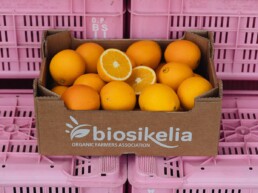
Navelinas are the first oranges to ripen, starting with the VCR variety which we harvest as early as October. Their early ripening also defines their flavor: sweet, yet with a pleasant, noticeable tangy note that balances the taste and makes it unique.
These oranges are seedless and almost always oval in shape, with the exception of the Nucellare which is slightly rounder. The skin, deep orange in color, is smooth and uniform, releasing its fragrance upon peeling.
Sweetness (Brix)::
11,5 - 14

Acidity:
1 - 1,6

Juice percentage:
48% or more

Excellent to enjoy segment by segment for citrus lovers, Navelinas truly shine in desserts and marmalades, balancing the sweetness of recipes with their interesting tangy touch.
Their firm, well-structured peel—100% edible—is ideal for adding to marmalades or making candied orange peel (perhaps even coated in chocolate!).

Washington Navel
Season: Winter / Spring
Variety name: Washington Navel
Harvesting months: from December to March

"Washington Navel" Orange
A US Navelina: the Washington Navel orange is a variety with the characteristic “navel” discovered in the USA and subsequently spread worldwide for its great versatility.
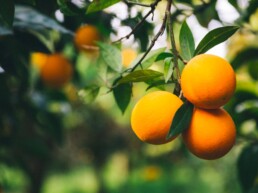
The Washington Navel is a medium-large orange (around 200 grams) and is distinguished from other Navelinas by its thin, easily peelable rind, its melt-in-the-mouth flesh, and its perfectly balanced flavor, with low acidity that makes it extremely easy to digest.
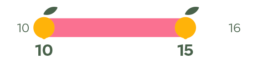
Sweetness (Brix):
10 - 15
Acidity:
0.75 - 1.3

Juice percentage:
36% - 42%

Balanced and light: the Washington Navel is the perfect table orange, ideal to enjoy after meals. Whoever says citrus fruits are heavy after eating has never tried a Washington!
Also an excellent choice for morning freshly squeezed juices, thanks to its excellent juice yield. Truly an all-round orange.

Chislett Summer Navel
Season: Primavera / Estate
Variety name: Chislett Summer Navel
Harvesting months: from April to July

“Chislett Summer Navel” Orange
Like other late navel varieties, the Chislett Summer Navel derives from a mutation of the Washington Navel and was discovered in 1988 in Australia on the estate of Norm and Greg Chislett.
The Chislett Summer Navel orange is a rounded or slightly ovoid fruit, with good firmness and bright orange flesh. This orange features the characteristic “navel” typical of Navel varieties and stands out for its high content of sugars and citric acid, which creates a bold, balanced flavor.
It is a true summer orange, thanks to its extended harvesting window reaching late summer: alongside Navel Powell and Valencia, it is a key player in continuing the orange campaign into the warmest season.
Sweetness (Brix):
11-13

Acidity:
0,8

Juice percentage:
51,7%

The Chislett Summer Navel boasts an excellent juice yield and a balanced flavor: it is among the ideal oranges for freshly squeezed juice, also thanks to the absence of limonin, the compound that in some cases causes a bitter aftertaste in citrus fruits.

Lane Late
Season: Spring / Summer
Variety name: Lane Late
Harvesting months: from March to April
"Lane Late" Orange
The Lane Late orange is a relative of the Washington Navel: it derives in fact from a mutation of this plant, discovered by a citrus grower whose surname was Lane, in Australia around 1950.
It is a later orange variety compared to its similar navel counterparts, with characteristics that determine its ripening from March onward, sometimes allowing the fruit to remain in optimal condition on the tree even through May: hence the term “late” in its name.
Lane Late oranges are spherical in shape, with thin skin that is less pebbled than Washington Navel, characterized by crisp blonde flesh, seedlessness, a sweet flavor, and fairly low sugar content: its sweetness is indeed enhanced by low acidity.
Sweetness (Brix):
11-13

Acidity:
0,8 - 1,3

Juice percentage:
44,5%

Thanks to its sweetness and the crispness of its flesh, the Lane Late orange is a delight to eat at the table, but by virtue of its substantial juice content, it is also perfect for freshly squeezed juice: truly an all-round orange.

Navel Powell
Stagione: Spring / Summer
Nome varietà: Navel Powell
Harvesting months: from April to July
"Navel Powell" Orange
Like other summer navel oranges (with the characteristic “navel” resulting from a second fruit growing inside the first), Navel Powell derives from a mutation of the Washington Navel, discovered in Australia in 1982 by Neil and Joyce Powell.
The Navel Powell is an oval / elongated orange with a thin rind rich in essential oils and flesh ranging in color from yellow to orange. This fruit, like other navel varieties, is seedless. The main characteristic of this variety is its ability to maintain excellent quality well into late summer, making it a quintessential summer orange alongside Chislett Summer Navel and Valencia.
Thanks to these varieties, it is possible to enjoy delicious oranges up to the warmest months.
Sweetness (Brix):
13

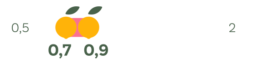
Acidity:
0,7 - 0,9
Juice percentage:
48,3%

High sugar content, low acidity, optimal juice percentage, and absence of limonin—the compound that imparts a bitter note to citrus fruits: Navel Powell is a perfect orange for freshly squeezed juice, but also delicious enjoyed in segments in all its freshness.

Rohde Summer Navel
Season: Spring / Summer
Variety name: Rohde Summer Navel
Harvesting months: from March to April
"Rohde Summer Navel" Orange
Like Lane Late and all late navel oranges, Rohde also derives from the Washington Navel, and was selected for the first time in 1978 by Peter McLaren in Australia.
The word “summer” represents the lateness of this orange variety: Rohde oranges ripen between March and April but have a resistance on the tree reaching up to 90 days in some cases. These are oranges with an elongated shape and deep orange skin, thicker than that of the Lane Late but still easy to peel.
Like all navels, these oranges are seedless and, thanks to their optimal balance between sweetness and acidity, allow the orange season to carry over from late spring almost into summer.
Sweetness (Brix):
11,5-13,5

Acidity:
0,8

Juice percentage:
47,6%

Here again, as with the Lane Late, we are facing a delicious orange of remarkable versatility.
The Rohde Summer Navel is excellent eaten in segments and also ideal for freshly squeezed juices, thanks to its excellent sweetness/acidity ratio and good juice percentage.

Valencia
Season: Spring / Summer
Variety name: Valencia
Harvesting months: from May to July
"Valencia" Orange
The Valencia variety comes from California, where it was discovered in the late nineteenth century: it owes its name to the Spanish city, famous for the sweetness of its oranges.
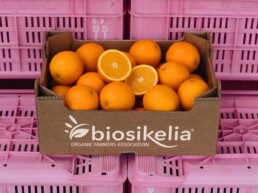
Valencia is the summer orange: because of its harvesting period, it can be enjoyed in all its sweetness at the end of the classic orange season, for nearly the entire summer.
It is a medium-large fruit with a spherical or slightly elliptical shape and a firm, light orange rind. The crisp flesh contains a high juice yield and very few seeds. The skin has a low limonin content, making it among the least bitter.
Sweetness (Brix)::
11,5 - 14

Acidity:
0,8 - 1,5

Juice percentage:
50-55%

Valencia is perfect for freshly squeezed juices, thanks to its high juice percentage and pronounced sweetness, well balanced by a pleasing acidity. A concentrate of vitamins and flavor to enjoy at any time of day, to recharge during the warm season.

Newhall
Season: Winter / Spring
Variety name: Newhall
Harvesting months: from December to March
The "Newhall" Orange
The Newhall orange is a derivative of the Navelina and takes its name from the commercial company that discovered it in the 1960s, kicking off a major success story that continues to this day.
When you order a freshly squeezed orange juice at a cafe, it is almost certainly the juice of a Newhall.
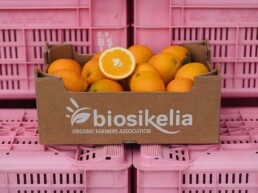
Like all Navelinas, Newhall oranges are medium-large in size and oval-shaped, featuring blonde, seedless flesh. Their rind is a darker, more intense orange—almost reddish—because we harvest them later than earlier Navelinas.
Newhall oranges possess a sweet flavor and a high juice percentage: for this reason, they are the preferred choice for freshly squeezed juice and the commercial production of desserts and liqueurs. Furthermore, they are highly resistant oranges, well-suited for long-distance transport: their goodness reaches you wherever you are.
Sweetness (Brix):
11 - 13

Acidity:
0,8 - 1

Juice percentage:
45% or more

Thanks to their flavor, Newhalls are delicious for fresh eating and ideal for making freshly squeezed juices—especially for children, drawn in by their sweetness. For adults, we also recommend orange liqueurs: making them with Newhall guarantees an excellent result!